Mining Crisis Renews Devolution Debate as Gov. Makinde Demands States Take Control
The death of 37 suspected illegal miners in Niger State has reopened a longstanding question in the solid minerals sector over the absolute control of the exploration of mineral resources beneath the soil of the country.
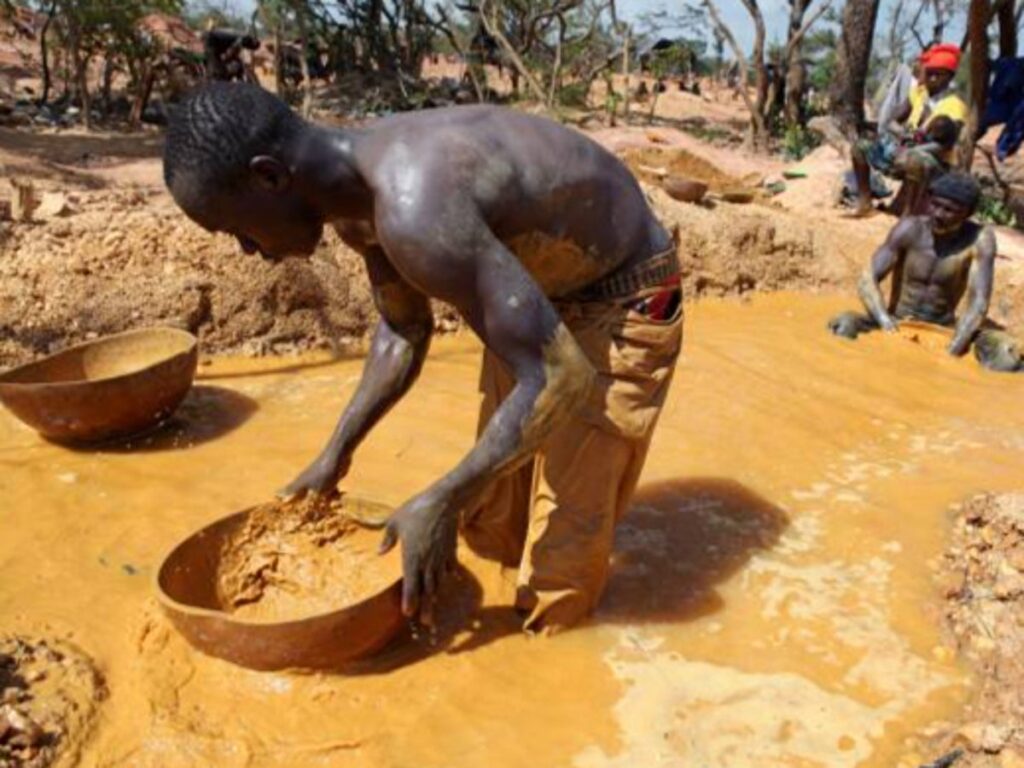
According to record, Nigeria has over 400 different mineral resources deposited in over 500 locations across the country. Crude oil, gold, lithium, copper, beaxite, Tantalite, Gemstone, Limestone among others, the Federal Government, since independence, has maintained a firm control over the exploration, licensing, regulation and collection of royalties of the resources.
Yesterday, Tuesday, September 22, the Oyo State Governor, Seyi Makinde, challenge the status quo yet again. He joined precious agitators for similar review, to call for mining to be removed from the Exclusive Legislative List of the Federal Government and the responsibility devolved to states, with the FG retaining an oversight role. Speaking in Katsina State,
Makinde said, “Devolve that responsibility to the states and let there be oversight only at the federal level. They will do better.” His position followed the deaths of 37 suspected illegal miners arrested during anti illegal mining operations in Niger State on September 15 and 16. The men later died in the custody of the Nigeria Security and Civil Defence Corps.
President Bola Tinubu has ordered a probe, while federal authorities, the Niger State Government and security agencies are investigating the circumstances surrounding the deaths. But beyond the Niger tragedy lies a deeper structural issue.Under Item 39 of Part I of the Second Schedule to the 1999 Constitution, mines and minerals, including oil fields, oil mining, geological surveys and natural gas, are on the Exclusive Legislative List.
The Minerals and Mining Act 2007 reinforces the arrangement by vesting ownership and control of mineral resources in the Federal Government and providing for federal licensing of exploration and mining activities.The result is a clear division between where mining happens and where much of the regulatory authority sits. Minerals are located in states.
Mining takes place on land administered within states, while communities affected by mining deal directly with state and local authorities. Yet mining titles, regulation and enforcement remain principally federal responsibilities.
Makinde is not the first governor to question this arrangement. Former Kaduna State Governor, Nasir El Rufai, had previously proposed that mines and minerals, except offshore resources, should become shared responsibilities. He argued that states control the land where mining occurs and are closer to affected communities.
The Southern Governors Forum has similarly questioned the concentration of resource powers at the centre, asking whether states should have greater authority to exploit resources within their territories while paying agreed royalties or taxes into the Federation.
Kano State provides another example of the growing demand for greater state involvement. The state established a Ministry of Solid Minerals Resources and in 2022 approved a bill to establish a Mineral Development Agency. The government argued that a dedicated state structure was necessary to improve supervision and tackle illegal mining, noting that the number of federal officials available for effective monitoring was limited.
Ogun State also established a mineral resources agency in 2024 for mineral identification, geological mapping and data collection, while acknowledging that federal authorities retained regulatory control.
These developments expose the central contradiction in the present structure.
States bear many of the environmental, security and social consequences of mining, yet lack full authority over the activities generating those consequences.The Federal Government has consistently maintained that mining is an exclusive federal responsibility.
In 2023, Minister of Solid Minerals Development, Dele Alake, said governors lacked the constitutional authority to ban mining operations.
In 2024, the Federal Government and 32 states established a joint committee to address problems in the sector, but Alake maintained that the collaboration would operate within the existing constitutional framework.Collaboration, however, has not resolved the jurisdictional question. Illegal mining, unsafe operations, abandoned pits, environmental degradation and weak enforcement remain major concerns.
The Niger incident has brought the problem into sharp focus. Federal authorities have deployed security agencies to mining sites and the Ministry of Solid Minerals Development has sent technical experts to assist with the Niger investigation.
Niger Governor, Umaru Bago, has meanwhile called for an executive order from the Presidency or the Federal Ministry of Solid Minerals Development to stop mining in locations considered unsafe. That request illustrates the limits of state authority under the current system.
A governor can confront unsafe mining activities in his state, face pressure from affected communities and deal with the environmental and security consequences, yet cannot exercise full regulatory control over mining operations.
This is the constitutional gap Makinde wants addressed.His proposal, he argued, does not necessarily mean removing the Federal Government completely from mining. It envisages states taking primary responsibility, while the centre retains oversight, national standards, strategic mineral policy, geological data and other matters of national importance.
Such a change would require constitutional amendment and safeguards against political interference, weak enforcement and regulatory abuse at state level.
The argument for devolution is that regulation would move closer to the mines and communities. States would have a stronger incentive to monitor operations, protect residents, respond to emergencies and develop mineral resources within their territories.
The country already has structures for federal and state collaboration, including the National Council on Mining and Mineral Resources Development and State Mineral Resources and Environmental Management Committees. The question is whether collaboration within the present framework is sufficient.
The Niger deaths have added a human cost to an institutional debate that has continued for years. Thirty seven people arrested in an anti illegal mining operation died in custody. While investigations are yet to establish the definitive circumstances of their deaths, the incident has renewed questions about how mining communities are monitored, how illegal operators are handled and whether the existing regulatory structure is working effectively. For advocates of devolution, the case is straightforward: government closest to the mining community should have greater authority to prevent problems before they become national emergencies. Those defending federal control argue that mineral resources require uniform national regulation to prevent fragmentation and uncontrolled exploitation.
But Makinde has now pushed the issue back onto the national agenda with a specific demand: remove mining from the Exclusive Legislative List and give states primary control, while retaining federal oversight.That would require a constitutional amendment, not merely an administrative directive.
The wider question is whether the country can effectively regulate its mineral wealth from the centre when the mines, workers, communities and environmental consequences remain firmly within the states. For the mining sector, the debate is no longer simply about who issues licences. It is about which level of government should have the authority and responsibility to make mining safer, more accountable and more productive.