Bille Gas Crisis Deepens as Victim Dies, Industry, CSOs Demand Urgent Action
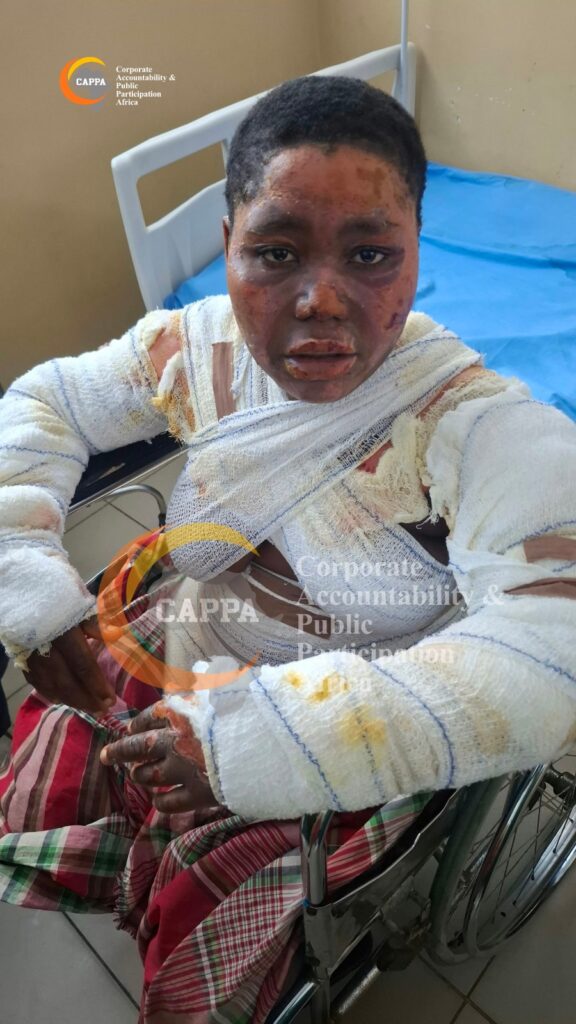
The death of 29 year old Joy Amos, has deepened concerns over the unresolved gas seepage in Bille Kingdom, Degema Local Government Area of Rivers State, has attracted tr wrath of civil society organisations, community groups and industry stakeholders.
The stakeholders are calling for urgent measures to prevent further deaths, explosions, environmental damage, and compensation for the family of the victims.
Amos died yesterday, Tuesday, September 22, weeks after she suffered severe burns in a gas related explosion inside her room at No. 18, Opu Ibiila Community, Bille, on September 3.
The explosion reportedly shattered the windows of the building and set part of the premises ablaze.
Amos was initially treated at a private clinic in Bille before she was transferred to Port Harcourt on September 12.
Her death has now brought renewed attention to a gas seepage crisis that residents have reported since late 2025.
Corporate Accountability and Public Participation Africa, CAPPA, said the circumstances surrounding Amos’ death should be properly documented and independently investigated. It also called for an autopsy.
The organisation said the room where the explosion occurred was still producing an apparent bubbling sound beneath the cemented floor, accompanied by a gas like odour.
In a statement signed by ita Media and Communication Officer, Robert Egbe, CAPPA said its July 6 field visit documented gas emissions from wells, boreholes, residential compounds, waterways and school grounds.
It also cited investigations indicating elevated methane, hydrogen sulphide and carbon dioxide levels, groundwater contamination and poor air quality.
The organisation had warned in its report and documentary, “Danger! Bille Is Highly Flammable,” that the continuing emissions could result in a major disaster.
That warning acquired a new urgency after the September 3 explosion.
CAPPA had earlier demanded a temporary suspension of oil and gas operations in and around Bille until the source of the emissions was established and the community certified safe by independent experts.
It also called for emergency response teams, temporary evacuation of residents in affected areas and continuous air and water monitoring.
Similarly, Spaces for Change, S4C, also called for an independent investigation into the September 3 explosion.
Its Executive Director, Victoria Ibezim Ohaeri, said the incident should be examined against the background of longstanding reports of gas odours, bubbling waterways and gas around residential and community spaces.
S4C said the actual cause of the explosion must be established through competent technical investigation rather than assumed from the available reports.
It warned, however, that if the reported conditions were confirmed, they could pose serious risks to residents, drinking water, fisheries and livelihoods.
The organisation has since placed Bille at the centre of its forthcoming National Extractives Dialogue scheduled for September 29 and 30 in Port Harcourt.
The fifth edition of the dialogue, organised by S4C in partnership with the Nigeria Extractive Industries Transparency Initiative and NOSDRA, is themed Remediation Before Divestment and Energy Transition: Amplifying the Bille Environmental Crisis.
S4C said the forum would bring together regulators, government officials, oil companies, host communities, civil society organisations, academics and other stakeholders to discuss the Bille situation and wider environmental liabilities in Nigeria’s extractive sector.
The concern has also attracted international human rights attention, as
Amnesty International, in a September 17 update, said residents of Bille faced risks from methane leaks that had reportedly affected the town since October 2025.
The organisation said gas from an unidentified source was reportedly bubbling through drinking water wells, cracks in the ground and surrounding water bodies. It called on NOSDRA to take immediate action to identify and stop the leaks.
Earlier in the year, Environmental Rights Action and Social Action joined Bille community representatives in seeking intervention from NOSDRA.
During an advocacy visit to the agency’s Port Harcourt office in March, ERA Programme Manager Kentebe Ebiaridor raised concerns over what the group described as an inadequate regulatory response.
Social Action’s Resource Justice Manager, Prince Edegbuo, warned at the time that the situation could escalate into a public health emergency.
The groups called for clarity on the source of the emissions and the responsibilities of operators in the area.
Social Action subsequently raised further concerns over data from environmental assessments. A Premium Times investigation reported that available findings from NOSDRA’s December 2025 assessment indicated the presence of methane, volatile organic compounds and hydrogen sulphide in ambient air.
The report also cited methane concentrations exceeding 36 per cent of the Lower Explosive Limit at some locations. Social Action said such concentrations indicated a heightened risk of fire and explosion.
The findings have not, however, settled the fundamental question of the source of the gas.
NUPRC has repeatedly said its technical investigation is continuing. Following a Federal Government visit to Bille in July, NUPRC Chief Executive, Oritsemeyiwa Eyesan, said preliminary investigations had been conducted and that an international firm had been engaged to undertake further studies.
She said technical experts from across the oil and gas sector were working with the commission to determine the source of the seepage.
NUPRC also disclosed that its assessment indicated contamination of the first aquifer and promised potable water for affected residents.
The July intervention involved the Minister of State for Petroleum Resources, Gas, Ekperikpe Ekpo, NUPRC officials and representatives of oil and gas operators.
The Federal Government promised potable water, medical outreach, additional firefighting equipment and support for electricity supply.
Rivers State Governor, Siminalayi Fubara, who is currently away in New York, in the delegation of the Country’s Vice President to attend the 81th General Assembly of the United Nations, also directed the upgrade of the community’s primary healthcare facility.
The industry response has since expanded. A six day medical outreach coordinated by NUPRC in September reportedly reached 5,250 Bille residents, with participation from the Oil Producers Trade Section, OPTS, the Independent Petroleum Producers Group, IPPG, and the Nigerian National Petroleum Company Limited.
The intervention was presented as part of the humanitarian response while technical investigations into the source of the gas continued.
But pressure on the regulators has continued.
In July, the House of Representatives Committee on the South South Development Commission summoned NUPRC, NOSDRA, NNPC, the Rivers State Government, Degema Local Government Council and Bille representatives over the prolonged crisis.
Lawmakers questioned the pace of the response and the continuing absence of a conclusive explanation for the gas emissions.