UN Selects Nigeria, Five Others for Critical Minerals Value Chain Support
The United Nations has selected Nigeria and five other mineral producing countries for an initiative designed to help them capture greater economic value from critical minerals and develop stronger domestic value chains.
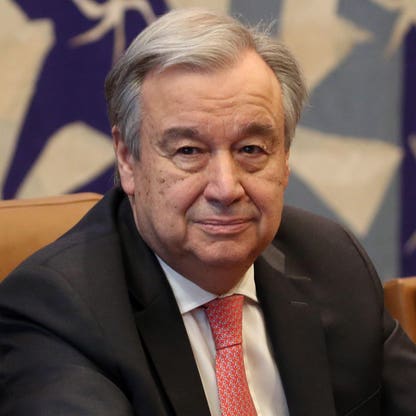
The initiative, announced by UN Secretary General António Guterres on Wednesday, September 23, on the sidelines of the 81st United Nations General Assembly in New York, initially covers Nigeria, Zambia, Guinea, Zimbabwe, Madagascar and Indonesia.
The countries are expected to receive coordinated assistance from UN agencies to strengthen their mineral industries, including support on policy, legislation, regulation, environmental and social safeguards and value chain development.
The new Country Support Mechanism on Critical Energy Transition Minerals comes as demand for copper, lithium, cobalt, nickel and other minerals rises because of the expansion of renewable energy, electric vehicles, battery storage and other technologies associated with the energy transition.
Selwin Hart, Guterres’ special adviser and assistant secretary general for climate action, said the initiative was intended to prevent resource rich countries from repeating a pattern in which mineral wealth leaves their economies without generating sufficient domestic value.
“Without this support, we run the risk of repeating the mistakes of the past, where these countries are trapped at the bottom of global value chains,” Hart said.
He added that without stronger domestic industries, the countries could remain “mere exporters of raw materials, while others benefit enormously from their mineral wealth.”
The intervention is particularly significant for Nigeria, whose government has been seeking to expand the solid minerals sector and move investment beyond extraction into processing and downstream manufacturing.
Nigeria’s inclusion also comes as the country takes a prominent role in the African critical minerals conversation at UNGA 81.
President Bola Tinubu, represented by Vice President Kashim Shettima, used an Africa Minerals Strategy Group high level roundtable in New York to call for an end to the export of raw minerals and greater African participation in processing and manufacturing.
The AMSG meeting, convened under the theme, “From Resources to Wealth: Continental Cooperation for Mineral Value Addition, Data Sovereignty, Innovative Financing and Critical Minerals Security,” placed value addition and control of mineral supply chains at the centre of Africa’s engagement with the changing global minerals market.
The UN initiative effectively adds an international support mechanism to that emerging African agenda.
The six initial beneficiaries occupy strategically important positions in global mineral supply chains. Zambia is a major copper producer,
Zimbabwe is an important African lithium producer, Indonesia is the world’s leading nickel miner, Guinea is a major bauxite producer, while Madagascar possesses deposits of cobalt, graphite and nickel. Nigeria’s mineral resources remain comparatively underdeveloped.
The UN said its agencies would coordinate assistance to strengthen the participating countries’ industries.
Hart said the system would provide “policy advice, legal and regulatory expertise, helping countries strengthen environmental and social safeguards.”
“The system can also provide assistance value chains,” he added.
The programme is to be led by the UN Development Programme and the UN Development Coordination Office.
The initiative builds on work already undertaken by the UN Secretary General’s panel on critical energy transition minerals, established as concerns grew over how the global transition to cleaner energy could affect mineral producing countries.
Guterres has previously described the growing demand for minerals as both an opportunity and a potential source of inequality if resource rich countries fail to secure a greater share of the resulting economic value.
“A world powered by renewables is a world hungry for critical minerals,” Guterres said in outlining the UN’s critical minerals initiative.
“For developing countries, critical minerals are a critical opportunity – to create jobs, diversify economies, dramatically boost revenues. But only if they are managed properly.”
Nigeria’s selection therefore comes at a point when the global mineral debate is moving beyond the question of where critical minerals are found to who controls their processing, technology, financing and downstream industries.
The development also coincides with increasing efforts by major economies to secure alternative mineral supply chains.
The United States, for instance, is developing strategic mineral inventories while seeking stronger relationships with mineral producing countries, while China retains a dominant position in several critical mineral processing chains.
For Nigeria, the opportunity presented by the UN programme will ultimately depend on how the support translates into geological data development, processing infrastructure, investment, technical capacity, environmental safeguards and commercially viable mineral value chains.
The UN initiative has nevertheless placed Nigeria among a small initial group of countries receiving targeted international support at a time when critical minerals are becoming increasingly central to global industrial and energy policy