
Italy partners Nigeria, Mulls Opening Ceramic Factory in the Country
By Mining Today
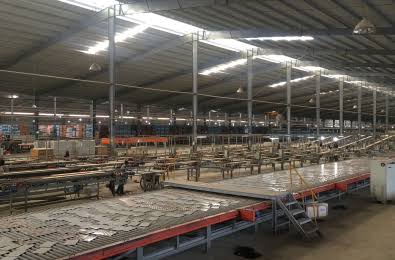
Nigeria’s effort to build a competitive ceramic industry is set to receive a boost from a proposed university-based pilot factory and technology partnership with Italian ceramic manufacturers.
Mudiame University, an Italian based citadel of knowledge, plans to establish a pilot ceramic factory in the country within the next five to six months. This is to he be executed in collaborations with between five and seven Italian organisations, including the Association of Italian Manufacturers of Machinery and Equipment for Ceramics, System Ceramics and Gabbrielli Technology.
The partnerships are expected to support equipment development, technical training, research and technology transfer, while exposing students to the practical operation and design of ceramic production systems.
The proposed factory is significant beyond the university because a functional local ceramic manufacturing base can provide the practical link between Nigeria’s mineral resources and its construction, housing, sanitary ware and manufacturing markets.
Mining Today can write tust Nigeria has substantial deposits of clay, silica and other industrial minerals, but a large share of ceramic products consumed in the country, including tiles and sanitary ware, were imported or produced through foreign-controlled industrial systems.
The new development tend to address the gap and further domesticate local beneficiation of the resources.
Chancellor of Mudiame University and Chairman of Mudiame International Group, Prof. Sunny Eromosele, said the initiative could help address the technical and manpower gaps that have continued to limit Nigeria’s ceramic industry and contribute to the country’s dependence on imported ceramic products.
Speaking after attending TECNA 2026, the international exhibition for the ceramic and surface industry in Rimini, Italy, Eromosele said Nigeria had the raw materials and market but lacked the specialised knowledge and industrial capacity required to exploit them effectively.
“The first thing is knowledge. We have not even started from the basics of identifying the institutions that should focus on mining and ceramics,” he said.
“We have the market and the raw materials, but we lack competency in technology, manpower and equipment.”
The development followed series of policies being introduced by the administration of President Bola Ahmed Tinibu, who upon assumption of office three and half years ago, had identified the mining and solid mineral as one of his purposeful vehicles to drive hoa proposed One Trillion USDollars Economy.
It would further help the country’#ss push to turn it’s abundant mineral resources into jobs, industrial capacity and locally made products.
Eromosele said annual ceramic imports into Nigeria were projected at $2.5 billion, describing the figure as an indication of the economic opportunity available through local production.
“Even if investors have billions of naira today, where is the local manpower? If it is not there, you cannot be competitive,” he said.
He said the pilot factory would enable students to gain industrial experience while helping develop the technical workforce required to sustain ceramic manufacturing and related industries.
“Most programmes do not provide sufficient practical knowledge. We want students to acquire first-hand experience operating and designing ceramic technology.”
Eromosele also linked ceramic engineering to Nigeria’s housing challenge, arguing that locally produced bricks and other alternative building materials could reduce pressure on cement and lower construction costs.
“With the right machinery and laterite, you can produce bricks and make housing more affordable,” he said.
He said the technology could also support production of sanitary products, construction materials, hospital infrastructure and components for advanced manufacturing.
The Italian partnerships, he stressed, are not intended to create another cycle of dependence on imported machinery.
“It should not simply be about importing machinery. As a university, we should be able to introduce our own technology and adapt what is available.”
Eromosele said previous failures of some Nigerian ceramic plants reflected gaps in research, technical expertise and innovation support.
“You cannot sustain a business if you do not have local competency or local people participating in research and development,” he said.
He called for stronger government support for universities and institutions developing specialised industrial knowledge, arguing that sustained university industry collaboration could help Nigeria reduce capital flight, develop indigenous technology and build a skilled workforce around its mineral resources.
#news
#Mining
#miningnews
#ceramics
#CeramicFactory
#italy
#nigeria
#NewsUpdate
#newsfeed