Dele Alake @ 70: The Journalist Who Took the Pen From the Newsroom to Nigeria’s Mineral Wealth

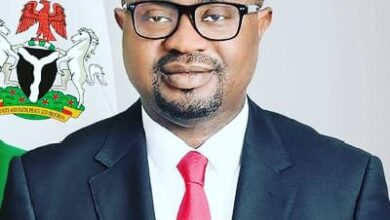
At 70, Dr. Dele Alake stands at an unusual intersection of journalism, democratic struggle, political communication, and economic transformation.
For a man whose professional life was forged in the newsroom, his influence now reaches far beyond the printed page. As Minister of Solid Minerals Development, Alake has become one of the principal voices behind Nigeria’s renewed attempt to reposition mining as a strategic pillar of economic diversification, industrialisation and investment.
He turned 70 on October 6, 2026, attracting goodwill from President Bola Ahmed Tinubu and stakeholders across the mining industry.
President Tinubu described him as a “steady hand, a forthright, upright, loyal, and committed ally,” recalling his decades of service as a frontline journalist, editor, political strategist, and public officer.
The President also acknowledged his growing continental influence as Chairman of the Africa Minerals Strategy Group, AMSG.
But the story of Dele Alake cannot be adequately told from his current office in Abuja. His journey began with journalism.
Born on October 6, 1956, Alake studied Political Science at the University of Lagos before obtaining a master’s degree in Mass Communication. He rose through the editorial ranks at Concord Press, eventually becoming Editor of Sunday Concord and later Editor of National Concord. His academic journey began at Surulere Baptist Primary School in Lagos, followed by Christ’s School, Ado Ekiti, where he obtained his West African School Certificate, and Igbobi College, Yaba, Lagos, where he pursued his Higher School Certificate. He obtained a Bachelor of Science degree in Political Science from the University of Lagos in 1978 and returned to the same university for a master’s degree in Mass Communication in 1981. In 2023, Caleb University conferred on him an honorary Doctorate degree in Mass Communication in recognition of his contributions as a journalist, media statesman and administrator.
At a time when newspapers were important instruments of national debate, Alake became one of the journalists who confronted military dictatorship and advocated democratic restoration.
His journalism became more than a profession. It became an instrument of political expression, democratic resistance, and public advocacy. That experience brought him into an enduring relationship with Tinubu.
When Tinubu became Governor of Lagos State in 1999, Alake entered government as Commissioner for Information and Strategy, a position he held throughout Tinubu’s eight-year tenure. The journalist who had spent years interrogating government was now inside government, responsible for communicating its policies, defending its decisions and helping shape its public narrative.
More than two decades later, the transition would take him to the Federal Executive Council.
In August 2023, President Tinubu appointed him Minister of Solid Minerals Development, placing the veteran communicator at the centre of one of Nigeria’s most ambitious economic reform programmes.
Under Alake, the ministry has pushed local value addition, improved geological information, investment mobilisation, stronger regulation, the fight against illegal mining and the development of mineral processing capacity.
His conviction has remained clear: “The mining sector was hitherto an all-comers affair where operators got away with flagrant abuse of regulations.”
He has also maintained that the reforms are intended to reposition the industry and create a more transparent, structured and investment-friendly mining environment. His influence, however, is no longer confined to Nigeria.
As Chairman of the Africa Minerals Strategy Group, Alake now sits at the centre of an emerging continental conversation about Africa’s mineral future.
The AMSG is a continental ministerial forum of African ministers responsible for minerals and mining, committed to coordinated action aimed at maximising value addition and beneficiation from Africa’s vast mineral resources.
Alake was first unanimously elected as the pioneer Chairman of the AMSG in 2024 and was re-elected in 2026, a vote of confidence from his continental counterparts.
Under his leadership, the group has promoted a united African voice on critical minerals, local beneficiation, value addition, industrialisation and stronger bargaining power in the global mineral market.
His argument is unequivocal.
“A fragmented Africa weakens our bargaining power. A united Africa strengthens our strategic relevance,” he said at the Kenya Mining Investment Conference and Exhibition in 2026.
He has equally insisted that Africa must move beyond the export of raw materials.
“For decades, Africa has remained largely an exporter of raw materials and an importer of finished products. This model has constrained industrial growth, weakened economic resilience and limited job creation across our nations,” he said.
For Alake, the answer is value addition.
“Value addition is not merely an economic aspiration; it is a development imperative. creates jobs for our youth, stimulates industrialisation, expands government revenues and positions Africa competitively in the industries of the future,” he said.
His continental vision has consequently gone beyond mining itself. He has argued that Africa must develop shared infrastructure, harmonise policies, strengthen geological data systems and build processing hubs that enable countries to retain more value from their mineral wealth.
“Through visionary leadership, strategic partnerships and continental cooperation, Africa can transition from being merely resource-rich to becoming truly value-rich,” he said.
His continental role has therefore added another dimension to a career already spanning journalism, politics and public administration.
At home, one of the important platforms through which this new mining direction is being discussed is Nigeria Mining Week, the annual industry convergence hosted by the Ministry of Solid Minerals Development in partnership with key industry institutions.
The forthcoming 2026 edition comes at a critical moment for Nigeria’s mining industry. The event brings together government, miners, investors, financiers, technology providers, professional bodies and international stakeholders to examine investment opportunities, policy, technology, processing and the future of the Nigerian mining value chain.
For Alake, such a convergence is more than an industry gathering.
It is a meeting point between policy and investment, between Nigeria’s mineral endowment and the global capital seeking critical minerals, and between the country’s ambition to extract resources and its determination to process and derive greater value from them.
Speaking ahead of Nigeria Mining Week, Alake described the event as “a powerful forum where we refine our shared vision,” aligning stakeholders around the objective of creating “a robust, self-reliant mining sector.”
That ambition has assumed greater significance as the Tinubu administration pursues the objective of building a $1 trillion Nigerian economy by 2030, with mining expected to play a much stronger role in economic diversification.
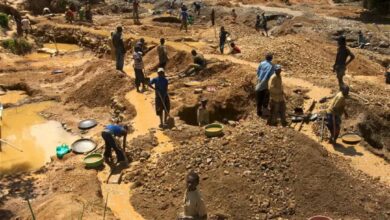
Nigeria is estimated to possess about $750 billion in untapped mineral resources, making the sector central to the country’s investment and industrialisation conversation.
Alake himself has long described mining as a critical instrument for diversification, noting that “beneath the nation’s soil lie vast mineral resources that harbor tremendous potential” for economic growth and prosperity. (fmino.gov.ng)
At 70, therefore, Alake’s story is not simply that of a journalist who became a minister.
It is the story of a professional who has repeatedly moved into unfamiliar terrain and attempted to leave an institutional footprint.
The newsroom taught him how to interrogate power.
Politics taught him how power works. Government gave him the opportunity to deploy both experiences in policy. Mining has now provided perhaps his most consequential assignment.
From the newsroom of Concord to the struggle for democratic restoration; Lagos government house to the Federal Executive Council, and now from Nigeria’s mineral fields to the leadership of the Africa Minerals Strategy Group, Alake’s trajectory has been defined by reinvention.
At 70, his pen no longer writes. It has disappeared and been replaced. The pen has been replaced with the policy file, the investment proposal, the mining licence, the geological map and the larger question of how the country can turn the wealth beneath its soil into prosperity above it.
Yet, in his own words, A lake believes the journey remains solidly grounded in service.
“Today, I turn 70 with deep gratitude to God for the gift of life and the privilege of serving my country,” he wrote in his birthday reflection.
“I am thankful for every lesson, challenge, and opportunity to contribute to Nigeria’s progress. My hope for our nation’s future is as strong as ever, and my commitment to helping build a better Nigeria with integrity and purpose remains unchanged.”
That may ultimately become the most consequential chapter of the veteran journalist’s long public journey.