Tibet’s 150 Million-Tonne Copper Potential Draws China Deeper Into Critical Minerals Race
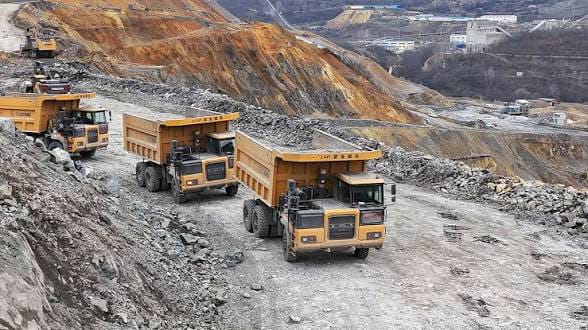
China is looking increasingly to the Qinghai-Tibet Plateau as a strategic source of copper and other critical minerals, with geological exploration pointing to a resource base that could reshape the country's domestic mineral supply.
The China Geological Survey said in January 2025 that more than 20 million tonnes of new copper resources had been discovered on the plateau over the preceding four years.
The geological agency said the region had four copper resource bases containing reserves of about 10 million tonnes each and estimated the plateau's broader copper potential at around 150 million tonnes. It said the region could develop into a world-class copper resource base.
The scale of the potential is particularly significant for China, which remains the world's largest copper consumer and a net importer of the metal.
Copper is central to power transmission, renewable energy infrastructure, electric vehicles and other industrial applications, making access to reliable supplies increasingly important as demand for electrification expands.
But the mineral story on the plateau extends well beyond copper.
The region is also known for significant deposits of chromium, antimony, lithium, boron, lead, zinc and other strategic minerals. Chinese authorities have identified Tibet as an important domestic resource base, with several mineral categories ranking among the country's leading identified resources.
The growing geological potential is now being matched by increasing corporate interest.
On September 17, Xizang Zhihui Mining and Zhaojin Non-Ferrous Mining entered a cooperation framework to jointly pursue mining investment opportunities in Tibet, targeting copper, molybdenum, chromium, antimony, gold, tungsten and zinc.
The agreement gives a practical commercial dimension to China's wider effort to translate geological discoveries into mineable and economically viable resources.
It also comes against a global critical-minerals race in which governments and mining companies are seeking greater control over the supply of minerals needed for energy systems, advanced manufacturing, batteries, electronics and defence industries.
China already occupies a dominant position in the processing of several critical minerals. Increasing domestic exploration and mine development could therefore complement the country's strength further down the mineral value chain.
But turning Tibet's geological potential into actual production will not be straightforward.
The plateau presents some of the mining industry's most difficult operating conditions, including extreme altitude, challenging terrain, long logistics routes, infrastructure requirements and environmental sensitivities.
Large resource estimates also do not automatically translate into commercial reserves or profitable mines.
Ore grade, metallurgy, infrastructure, permitting, capital requirements, processing capacity and operating costs will ultimately determine which discoveries can be developed.
For China's mining industry, however, the direction is becoming clearer: exploration is moving from identifying geological potential towards building a pipeline of assets capable of supporting domestic mineral supply.
The 20-million-tonne-plus copper discoveries and estimated 150-million-tonne potential provide the geological backdrop. The growing participation of mining companies provides the commercial mechanism.
The question now is how much of Tibet's enormous resource potential can be converted into producing mines — and how that additional supply could alter China's exposure to international mineral markets.